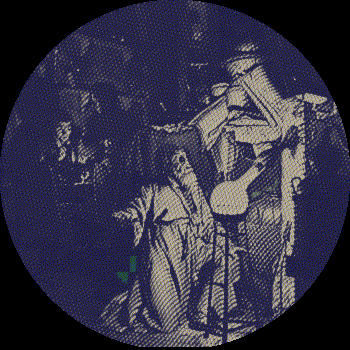
Adapted from an image by Joseph Wright of Derby (public domain), via Wikimedia Commons.
Hennig Brand
Discovered phosphorus in 1669.
Element
In 1669 Hennig Brand, an alchemist in Hamburg, boiled down urine and heated what was left until a vapour came off that glowed in the dark. Hoping it was the philosopher's stone, he kept the method secret.
Brand boiled down urine and got a substance that glowed in the dark: white phosphorus. See its three forms.
Same atoms, three different materials
White, red and black phosphorus are all pure phosphorus. The only difference is how the atoms are joined up, and that changes everything: one glows in the dark and bursts into flame on a warm day, one sits safely on a matchbox, and one is as calm as graphite.
White phosphorus
- Built from
- Separate P₄ molecules: four atoms in a pyramid
- Bond angle
- 60°, squeezed far tighter than phosphorus likes
- Looks like
- A soft, waxy, pale yellow solid
- In air
- Glows green in the dark; catches fire at about 30 °C
- Made by
- Condensing phosphorus vapour
- Toxic?
- Very. It’s stored under water
- Density
- 1.82 g/cm³
Each P₄ pyramid has its bonds squeezed to 60°, like bent springs. They snap open easily, which makes white phosphorus fiercely reactive.
Warm them up
- White phosphorus
- Glows faintly (try lights off)
- Red phosphorus
- Nothing happens
- Black phosphorus
- Nothing happens
Phosphorus in history and today
- Found in urine
In 1669 Hennig Brand boiled down buckets of urine hoping to make gold. He got a waxy solid that glowed in the dark: white phosphorus. Its name is Greek for “light-bearer”.
- Matches
The first matches used white phosphorus, which poisoned the factory workers who made them. Safety matches keep red phosphorus on the side of the box instead: the strike turns a tiny amount into something that lights.
- One atom thick
Peel black phosphorus down to a single crinkled sheet and you get phosphorene, first made in 2014. Like graphene, it’s being studied for tiny, fast electronics.
Atoms are drawn smaller than their true size so the structures are clear, and use the standard model colour for phosphorus, orange. Red phosphorus is really a tangle of chains; one tidy chain is shown. Never try this at home: white phosphorus is dangerous.
Keep exploring
Where the dates and stories on this page come from; each event on the timeline links to its own source.
- Hennig BrandEncyclopaedia Britannica
- PhosphorusRoyal Society of Chemistry
- Hennig BrandWikipedia