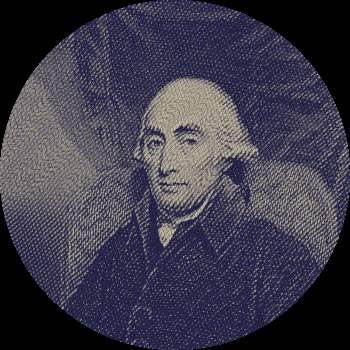
Adapted from an image by James Heath (engraver) after Henry Raeburn (public domain), via Wikimedia Commons.
Joseph Black
Discovered magnesium in 1755.
Element
In 1755 Joseph Black, in Edinburgh, showed that magnesia was a different substance from lime, although both come from heating similar rocks: the first recognition of magnesium as an element. Humphry Davy made a little of the pure metal in 1808.
Black recognised magnesium as an element. Set a ribbon of it alight.
Set a ribbon of magnesium alight
Magnesium is a light, silvery metal, but hold a strip of it in a flame and it bursts into one of the brightest lights in a school lab: a blinding white glare, hot enough to melt steel.
The ribbon weighs 0.24 g. Burn it and weigh what’s left.
Burning one gram of magnesium gives out about 25 kJ, roughly what it takes to bring a mug of water from cold to warm.
How would you put it out?
Pick one
Magnesium is burning in a heap. Which would you use to put it out?
Where you’ve seen it
- The first camera flash
Victorian photographers lit a puff of magnesium powder to get enough light indoors. Early flashbulbs used a twist of magnesium or aluminium foil inside glass.
- Flares and fireworks
Signal flares and the bright white sparkles in fireworks and sparklers owe their glare to burning magnesium.
- Why it doesn’t burn in your laptop
Solid magnesium alloys are used in laptops, cars and bikes: a thick piece carries heat away too fast to catch fire. Thin ribbon and powder are what burn so fiercely.
Masses from the element data’s atomic masses. Energy from magnesium oxide’s standard enthalpy of formation, 601.6 kJ/mol (NIST). The ribbon’s burn is sped up. Don’t try this without a teacher: the light can damage your eyes.
Keep exploring
Where the dates and stories on this page come from; each event on the timeline links to its own source.
- Joseph BlackEncyclopaedia Britannica
- MagnesiumRoyal Society of Chemistry
- Joseph BlackWikipedia