Adapted from an image by Commander-pirx (CC BY-SA 4.0), via Wikimedia Commons. This version is shared under the same licence.
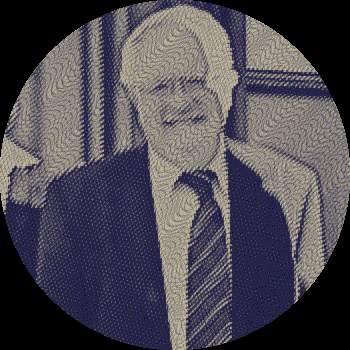
Sigurd Hofmann
Discovered darmstadtium (1994) and copernicium (1996).
On the timeline
Darmstadtium is named
IUPAC adopted the name darmstadtium for element 110, after the city where GSI made it.
Copernicium is named
IUPAC approved the name copernicium for element 112, made at GSI in Darmstadt, on the birthday of the astronomer Nicolaus Copernicus.
Element 112 is named coperniciumIUPAC Chemistry International
Elements
In 1994 a team at GSI in Darmstadt, including Sigurd Hofmann, Peter Armbruster and Gottfried Münzenberg, made element 110 by fusing nickel and lead nuclei. It was named darmstadtium, after the city.
In 1996 a team led by Sigurd Hofmann at GSI in Darmstadt fired zinc at lead for two weeks and made element 112. It was named copernicium, after Nicolaus Copernicus.
Hofmann's team made elements 110 to 112. See where they sit on the way to the island of stability.
The island of stability
Every element heavier than lead is radioactive, and the heavier they get, the faster they fall apart. Darmstadtium’s longest-lived known form, Darmstadtium-281, has a half-life of 12 seconds. Yet physicists predict that a little further on there is an “island” of heavier nuclei that should last much longer.
Darmstadtium-281 half-life 12 seconds
From uranium, which has lasted since before the Earth formed, lifetimes plunge. But from rutherfordium (104) on, the fall flattens out to seconds and minutes. Those longest-lived forms are also the most neutron-rich ones made so far: more neutrons help, just as the island idea predicts.
Walk towards the islandEach square is one nuclide: a particular number of protons (which element it is) and neutrons. Darker squares last longer. Squares with a dashed outline were measured from only a few atoms, so their half-lives are very uncertain. Tap a square, or use the buttons, to see it.
- Under 1 ms
- 1 ms – 1 s
- 1 s – 1 min
- 1 min – 1 h
- 1 h – 1 day
- Over a day
- Very uncertain
Darmstadtium-281
110 protons and 171 neutrons. Half-life 12 seconds; it splits in two (fission). That’s 13 neutrons short of the island’s predicted centre at 184.
Along each row, adding neutrons mostly makes the nucleus last longer. But no one has made a superheavy nucleus with more than 177 neutrons: they are made by fusing two lighter nuclei, and lighter nuclei don’t have enough neutrons to spare.
Why an island?
- Magic numbers
Protons and neutrons fill shells in the nucleus, much as electrons fill shells around it. Full shells are extra stable: lead-208, with 82 protons and 126 neutrons, is doubly “magic” and never decays.
- The next full shells
Theory predicts the next magic numbers at about 114 protons and 184 neutrons. Estimates of how long nuclei there would last range from minutes to far longer; no one knows.
- Made an atom at a time
Superheavy elements are made by firing a beam of one element at a target of another for weeks. Only a handful of atoms of the heaviest, like oganesson, have ever been seen.
Half-lives and decay modes from the IAEA Live Chart of Nuclides (ENSDF). An element’s longest-lived form counts only half-lives measured to better than their own size; values from only a few atoms are shown on the map with a dashed outline. The island’s outline is a sketch of where theory puts it, not a measurement.
Keep exploring
Where the dates and stories on this page come from; each event on the timeline links to its own source.
- Kurier 29/2022, obituary of Sigurd HofmannGSI
- DarmstadtiumRoyal Society of Chemistry
- CoperniciumRoyal Society of Chemistry
- Sigurd HofmannWikipedia