Carbon
Carbon can form the rigid network of diamond or the sliding layers of graphite. The atoms are the same; the way they bond changes the material. Carbon’s ability to form varied chains also underpins the molecules of life.
A stylized shell model. Electrons are quantum objects, not particles following these literal paths. Sizes and motion are illustrative.
At a glance
- Atomic number
- 6
- Atomic mass
- 12.011 u
- Phase
- Solid
- Density
- 3.513 (diamond); 2.2 (graphite) g/cm³
- Melting point
- Sublimes at 4,098 K
- Boiling point
- Sublimes at 4,098 K
- First ionization energy
- 1,086.5 kJ/mol
- Electronegativity
- 2.55
- Electron affinity
- 121.7763 kJ/mol
- Molar heat capacity
- 8.517 J/(mol·K)
- Period
- 2
- Appearance
- Unavailable
Conditions and isotopes affect measured properties. Some properties of short-lived elements are predicted. Electronegativity uses the Pauling scale.
Change the connections
In graphite, each carbon bonds to three neighbours within a sheet. Weak interactions between sheets allow the layers to slide.
One six-membered ring in a graphite sheet; the network extends beyond these atoms.
RSC Education · Allotropes of carbon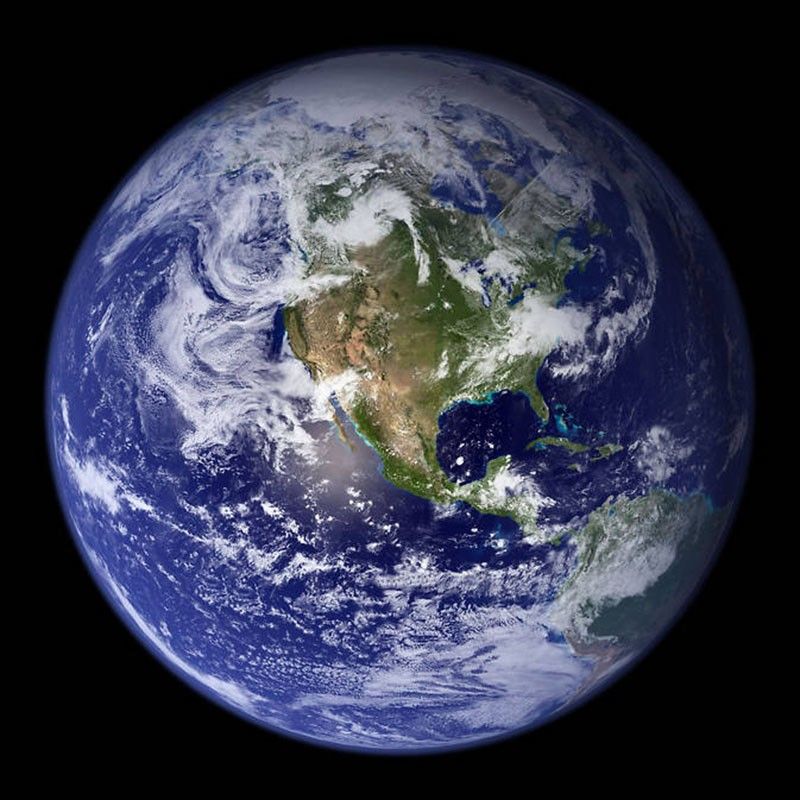
A planet of carbon chemistry
The Blue Marble, assembled from satellite observations in 2002. Carbon circulates through living things, oceans, air, and rocks.
Image: NASA’s Earth ObservatoryThe ability to connect
Carbon forms strong bonds with other carbon atoms. Long chains and more complex arrangements make possible the diversity of organic molecules, from simple fuels to the molecules that living organisms build.
Royal Society of Chemistry · CarbonKeep exploring
Explore the stories, imagery, and reference data in more depth. Properties with no value in the reference are marked unavailable.